
 enquiries@ever-resource.com
REGENERATE – sustainable recycling for lead batteries

85% reduction in the
carbon footprint
100% reduction in noxious
gas emissions
4MWh saved for every
10K tonnes processed
90% less waste:
direct route to PbO!
saves 10 – 20% on
PbO production
nanostructured PbO
upcycled performance
The lead-acid battery (LAB) is the world’s most successfully
recycled commodity product…
…and possesses the largest market share in energy storage – expected to surpass $85bn by 2026.
LAB recycling is successful because lead is infinitely recyclable and the economics work – yet
the industry which recycles these batteries is one of the world’s biggest polluters.
Regenerate tackles the heart of this problem by providing a solution to upcycle the end-of-life
battery paste. With our solution, incineration is avoided (paving the way for significant
decarbonisation and reduction in waste) while improving energy use and performance.
Lead batteries are safe, proven and low-cost. They are used widely in the automotive, traction
and uninterruptible power supply sectors. As the world shifts towards a green economy, lead
batteries can support our transition to clean energy and zero waste – but for this to happen, the
lead battery recycling industry must become cleaner and less wasteful. Regenerate is the answer.
REGENERATE® – a paradigm shift
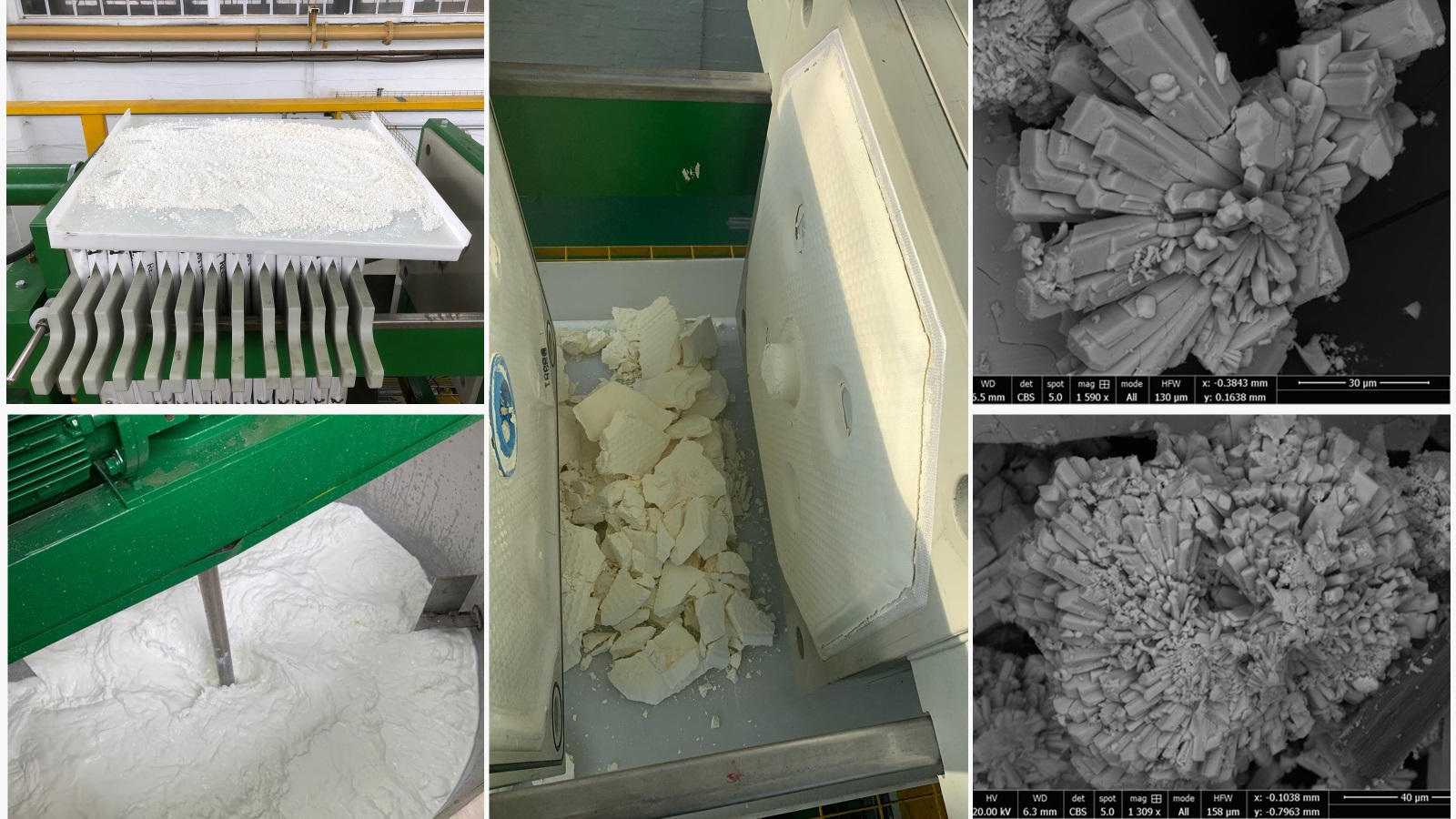
The Key Benefits of REGENERATE are:
1) Carbon Footprint Reduction: We achieve 85% reduction in the carbon footprint of battery
recycling, making a significant contribution to mitigating climate change. Our goal is to achieve
decarbonisation equivalent to removing 10 million tonnes of carbon dioxide from the atmosphere per year.
2) Waste Reduction: Our approach drastically cuts waste, reducing landfill volumes by more than
90%, thereby addressing waste management challenges.
3) Energy Savings: REGENERATE delivers energy savings equivalent to 2,000 – 3,000 tonnes of
coal for every 10,000 tonnes of batteries processed, fostering energy efficiency at a time when
the cost of energy is constantly under the spotlight.
4) Improved Battery Performance: The upcycled material produced by our process enhances the
energy density and life cycle of batteries by up to 40%. This performance improvement represents a
significant advancement in battery technology, and will reduce our dependency on primary resources.
REGENERATE® – the process

mechanical separation

mixing and filtration

crystallisation

calcination
Our approach is to optimise the battery paste by removing sulphates – a patent-pending technology
which replaces the incumbent, onerous “desulphurisation”. The optimised paste is then passed
through a series of chemical treatment steps in water media. First, the lead is dissolved to extract
impurities; then, the lead salts are converted into a pure metal-organic framework (MOF). Next,
the MOF is calcined to produce 99.99% pure leady oxide of various compositions for battery producers.
The wet chemical process manufacturing 99.99% lead citrate has been validated in a 10,000 tonne
per annum system. The next and final phase in the development of this technology is testing
leady oxide compositions in commercial batteries. The nanostructured oxides produced by the
Regenerate process possess higher energy density and other favourable properties compared to
incumbent Barton pot and ball mill oxides – hence we refer to them as “upcycled“.
These next-generation materials are only accessible via recycling – not primary resources!
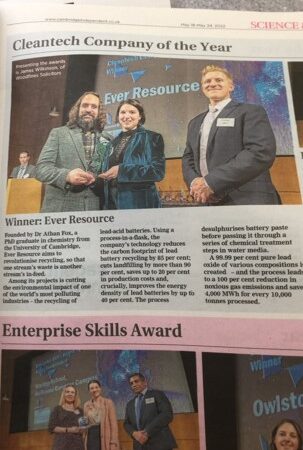
Ever Resource won the Cambridge Independent Cleantech Company of the Year Award in 2022.

Our work featured in “300 Years of Leadership and Innovation”, produced by by the History of Parliament Trust.